Natural wine, from vine to glass
As with everything else, natural wine have their loyal supporters and determined opponents. However, the truth is that more and more people are taking an interest in minimal intervention wine production. Many people thought it was just a fad, but it has become clear that more and more people are getting on board with additive-free wine. So what makes this type of wine so successful? To start with, we should explain exactly what natural wine is.
What is natural wine?
Although Regulation no. 479/2008 of the European Community in Annex IV of “Category of wine products” defines wine as “the product obtained exclusively from the total or partial alcoholic fermentation of fresh grapes, whether or not crushed, or of grape must”, in practice there is an endless list of authorised wine products that can be added when making a wine. Many conventional wineries add ingredients like sulphurs, yeasts, enzymes and nutrients. Natural wines, on the other hand, want to be faithful to this statement of intent and are therefore made without additives.
So, just like when we ask for a natural orange juice, we expect a juice made purely from squeezed oranges, with no sweeteners, no added vitamin B, colouring or preservatives, when we talk about natural wines we mean wines made only with fermented grape must, and no artificial additives.
Is natural wine the same as organic or biodynamic wine?
Organic, biodynamic and natural wine all start with a respect for nature, but they are slightly different.
Firstly, an organic wine is one that is made through respect for the land and the vineyard without using chemical products, artificial fertilisers or laboratory-produced phytosanitary treatments. Only certified organic techniques and additives can be used in the winemaking process.
Biodynamic wine seeks a balance with the ecosystem, taking into account, among other things, the cycles of nature and the lunar and astral calendars. In terms of production, natural additives can be used as long as they are in-keeping with the legal limits set by the official biodynamic certificates of Demeter or Biodyvin.
Finally, natural wines come from organic, ecological and/or biodynamic grapes, but no additives are added during the winemaking process. These wines are sold without filtering, clarifying or adding sulphur dioxide. However, be careful! We must remember that, because they are unregulated, there are some wines that are labelled as being natural, when in reality that is not the case.
How is a natural wine made?
“Tell me where you come from and I'll tell you who you are.” To be sure whether what we are look at is a natural wine, we need to know where it comes from. Although it is true that fermenting grape must properly requires an expert, winemakers who work without additives like to say that they are not involved in the process; they just monitor it to make sure the wine develops as it should by itself. Starting from the philosophy of not adding or removing anything from the grapes, the raw material must be excellent and so these winemakers never work with a fruit that they do not know the origin of.
These are grapes that have been respectfully cultivated, without using chemicals that could harm the strain’s natural balance. They use organic, ecological and/or biodynamic practices that result in a faithful reflection of the land itself. Likewise, there is consistent use of the surrounding natural resources and the work is mostly carried out manually.
In the winery, the must obtained from the grapes vinifies without adding commercial yeasts that alter the aromas or flavour. This is spontaneous alcoholic fermentation that takes place with the native yeasts from the grape skins. Similarly, malolactic fermentation takes place without using any external ingredients that would speed up the process. Finally, when the wine has been made, it is bottled without filtering or clarifying; which is why natural wines always look cloudy. Likewise, at no point during the process is one of today’s most controversial ingredients added: sulphur.
Sulphur. The crux of the matter
Sulphur is, without doubt, the ingredient that really sets natural wines apart from other wines. And if natural wines can boast about anything, it is not containing SO2. Many winemakers ensure that all their wines contain sulphur because in reality, they can be produced naturally during fermentation. So you could say that there are no wines without sulphites, only wines without added sulphites.
The SO2 that is added to conventional wines is an antiseptic, antioxidant and chemical antimicrobial that has guaranteed product quality for centuries. However, it is one thing to add sulphur to preserve and eliminate bacteria and another to misuse it to fix the potential deficiencies or imperfections in the wine. Today it is used throughout the production process: in the vineyard for pest control, in the winery to regulate fermentation and, finally, in the bottle to preserve the wine. But SO2 is a chemical product that should not be used lightly. In large proportions it can be very harmful. In addition, it can mask the authentic aromas and flavours of the wine. And it is here that natural wine come into their own. Despite the belief that you cannot make a wine properly without using sulphites, many winemakers spend their lives trying to prove that it can be done.
Today, a natural wine can be preserved without adding SO2. Of course, it all depends on how it is made. It relies on a great amount of care taken during the production process, from the vineyard to the shelf. The keys to success are using the highest quality, healthy grapes, hygienic facilities, careful fermentation and proper storage conditions. Likewise, it must be taken into account that every vintage is different and the winegrower himself will know in advance which wines should be enjoyed young and which can be stored for years. In short, natural wines have a higher demand on time than conventional wines, but when they are done well, they are something really special. That is why they are usually small productions and more expensive. But like everything else, good things are worth it!





 Red wine
 White wine
 Rosé wine
 Wines in Primeur
 Sherry and Port wine
 Sweet wine
 Orange wine
 Vermouth
 Champagne
 Cava
Cava Prosecco
 Lambrusco
 Crémant
 Moscato d'Asti
 Franciacorta
 Pet-Nat
 Corpinnat
 Other sparkling wines
 Rhum
Rhum Gin
Gin Whisky
 Vodka
Vodka Cognac
 Brandy
 Pastis
 Tequila
 Mezcal
 Grappa and Eau de vie
 Calvados
 Liqueurs
 Pacharán
 Apéritifs
 Wine gift boxes
 Boxed wines
 Boxed sparkling wines
 Wine bottles and glasses
 Gift card
 Non alcoholic Wine
 Non alcoholic Sparkling wine
 Non alcoholic Gin
 Other non-alcoholic drinks
 Aromas
 Wine conservation
 Decanters and aerators
 Bottle identifiers
 Corkscrews
 Service
 Glass identifiers
 Cleaners
 Accessories set
 Wine glasses
 Contact



 Price
Price Points
 Country
 Production area
 Designation of Origin
 Winery
 Style
Style Aging
Aging Type of grape
 Production
 Volume
 Pairing
 Vintage
 Filter and sort


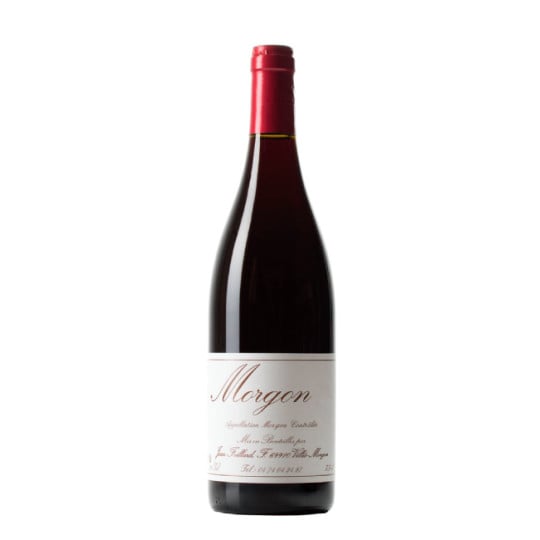
 AOC Morgon
(Beaujolais)
AOC Morgon
(Beaujolais)